There are weeks as a photographer in Queenstown where you have to pinch yourself a little… and this was one of them.
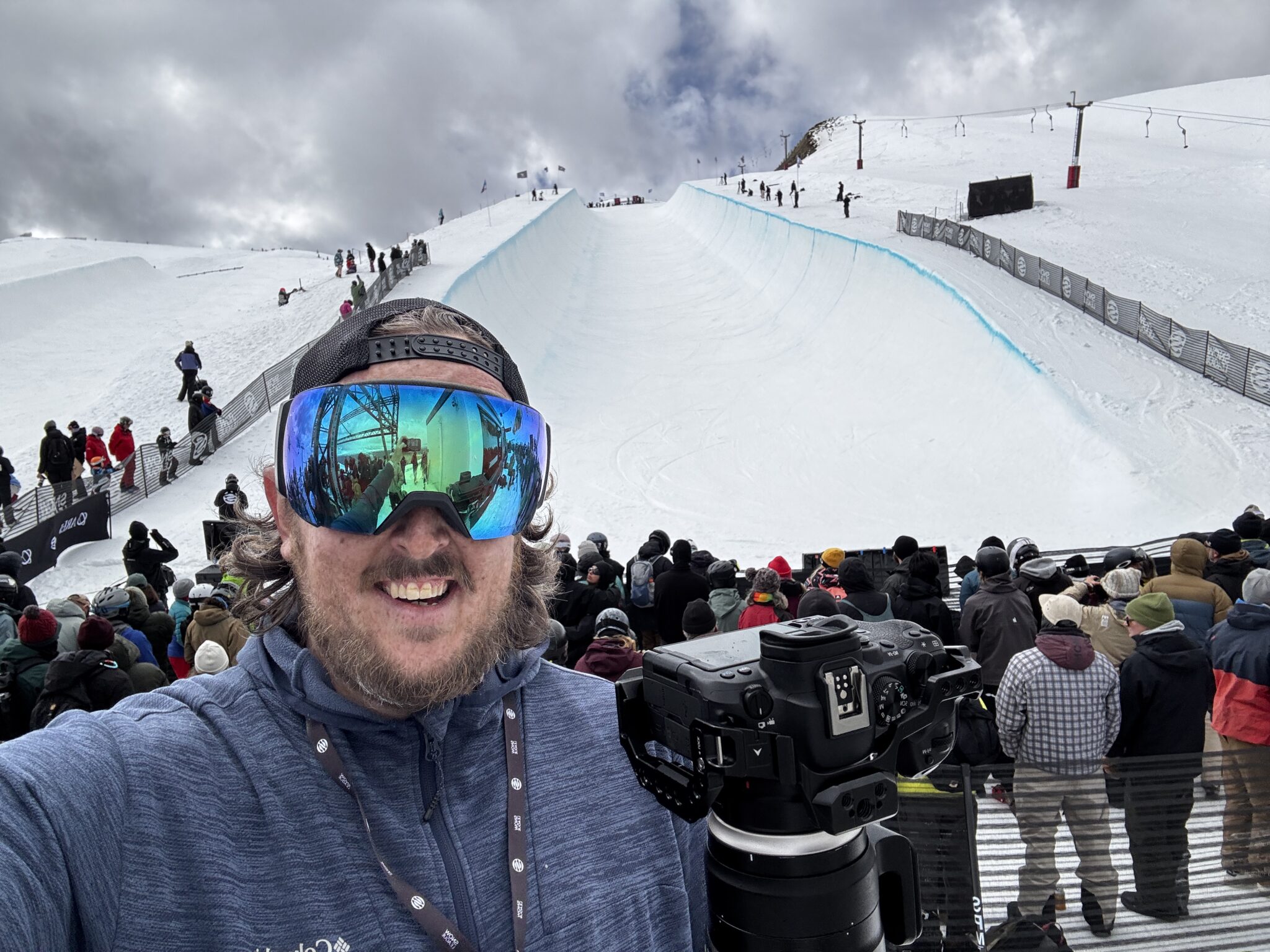
In September, The Snow League brought its first-ever World Challenge to New Zealand. It was three days of the best halfpipe skiers and snowboarders on the planet, split between Treble Cone and Cardrona, with Shaun White right in the middle of it. I was lucky enough to be there on a freelance media pass, shooting independently for my own portfolio.
I came home with a card full of frames, a head full of lessons and a real appreciation for how much goes into making an event like this look effortless. This post is all of it: what The Snow League actually is, how I approached photographing it, the lenses I used, and what it’s like to work a world-class event from the media zone.
What is The Snow League?
The Snow League is a professional halfpipe competition series for snowboarders and freeskiers, founded by Shaun White. It launched with its first season in 2025 across North America, Europe and Asia. The idea is simple: build a league around halfpipe, the discipline that made Shaun famous, with better formats, bigger prize money and a real season for fans to follow.
Season two opened in New Zealand before heading north to Aspen, Park City and a World Championship in LAAX, Switzerland in early 2027.
What was the Snow League World Challenge in New Zealand?
The World Challenge was a brand-new format, and New Zealand got to debut it. Instead of competing only as individuals, athletes were split into four teams of four: Team North America, Team Europe, Team Asia-Pacific and Team Challengers. Each team had a woman and a man in both freeski and snowboard, and they went head to head in the Cardrona halfpipe for a USD $100,000 purse.
The week kicked off with a Teamwork Challenge at Treble Cone, then practice and a Mini Pipe Challenge with Shaun at Cardrona, and finally semifinals and finals on Saturday 19 September.
It was a massive week for local riders too. Team Challengers took the win, with Cardrona locals Fin Melville Ives and Mischa Thomas each winning their freeski divisions on their home pipe. Watching Kiwi athletes win in front of a home crowd was something else!
Day One: Freeride at Treble Cone
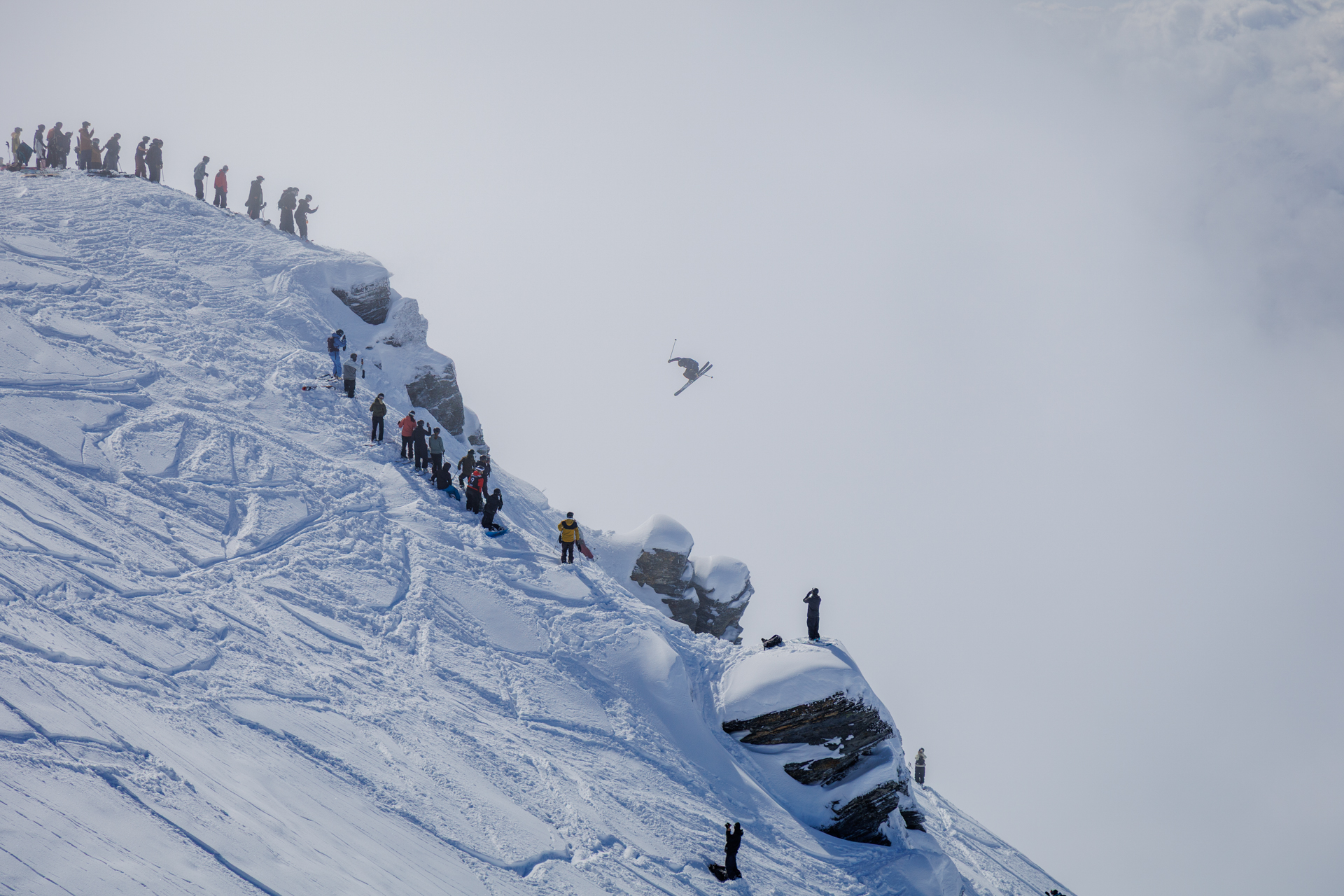
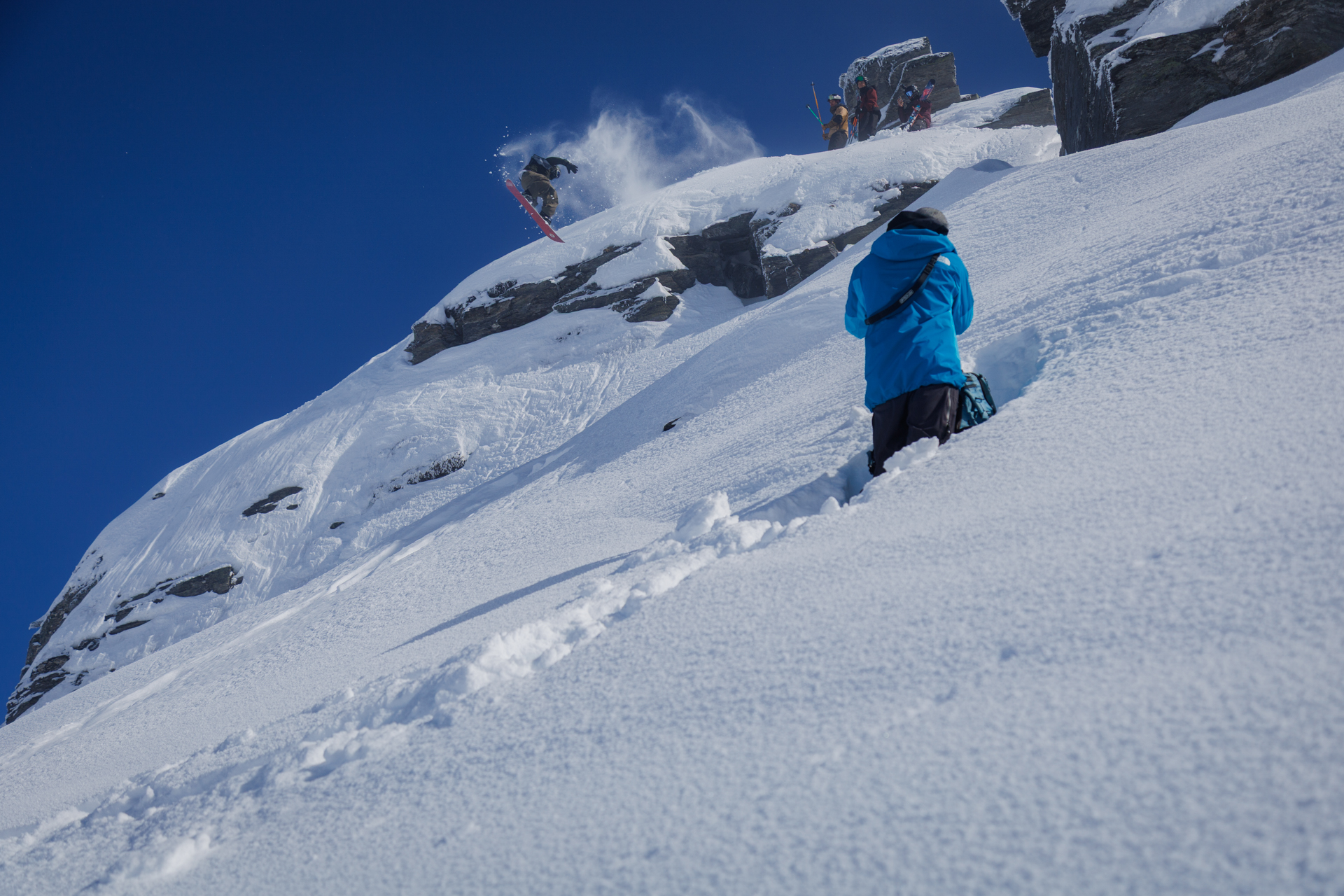
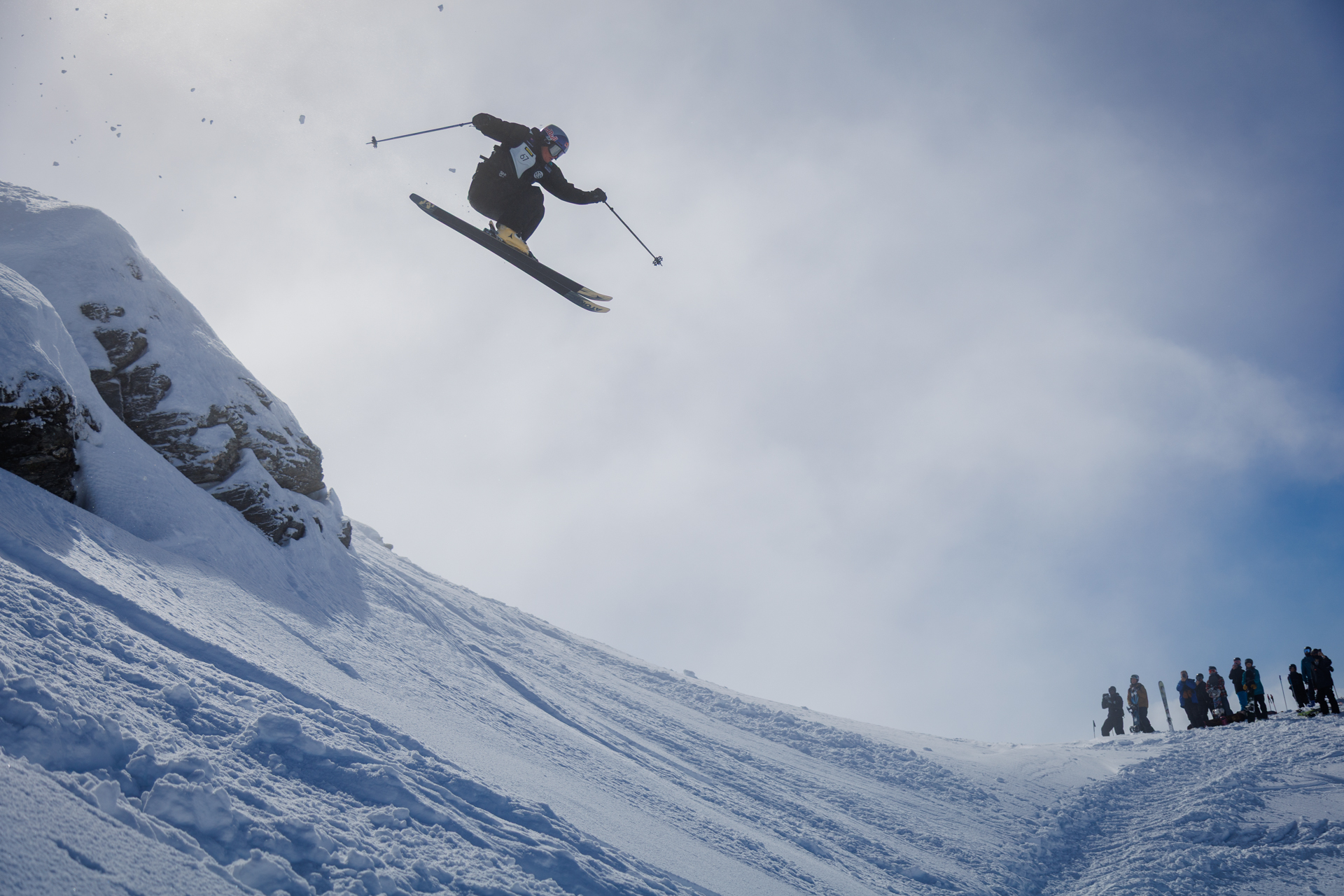
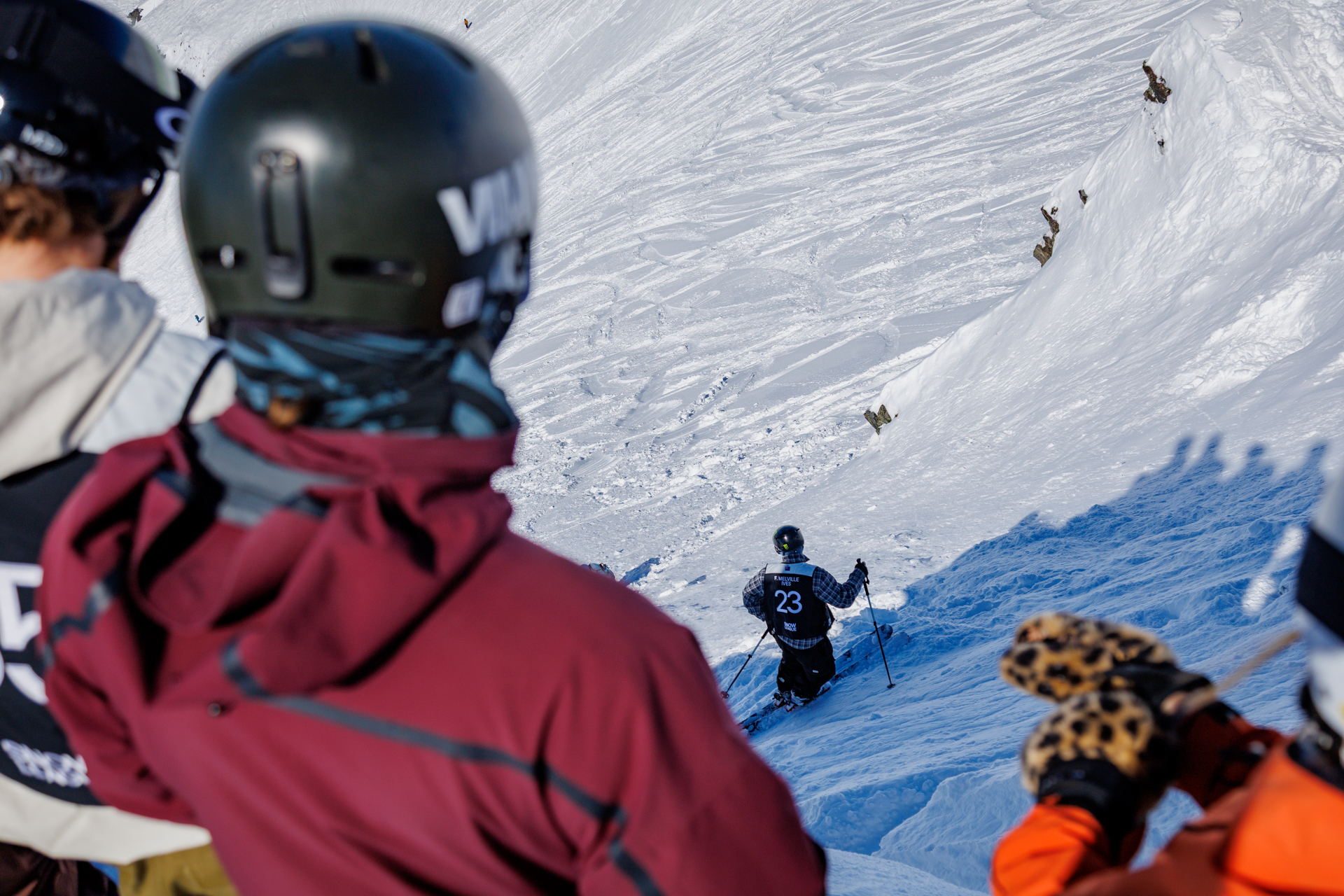
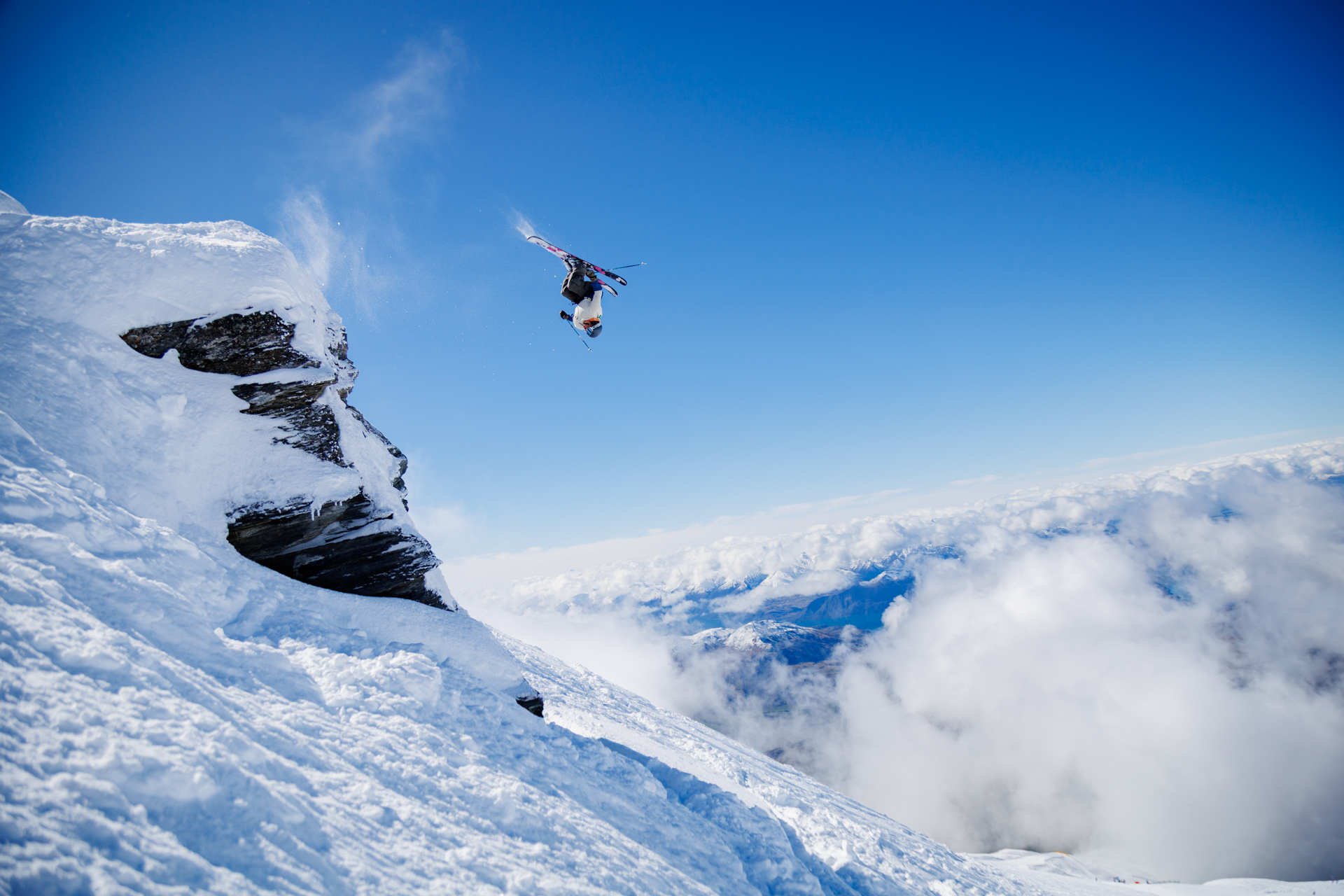
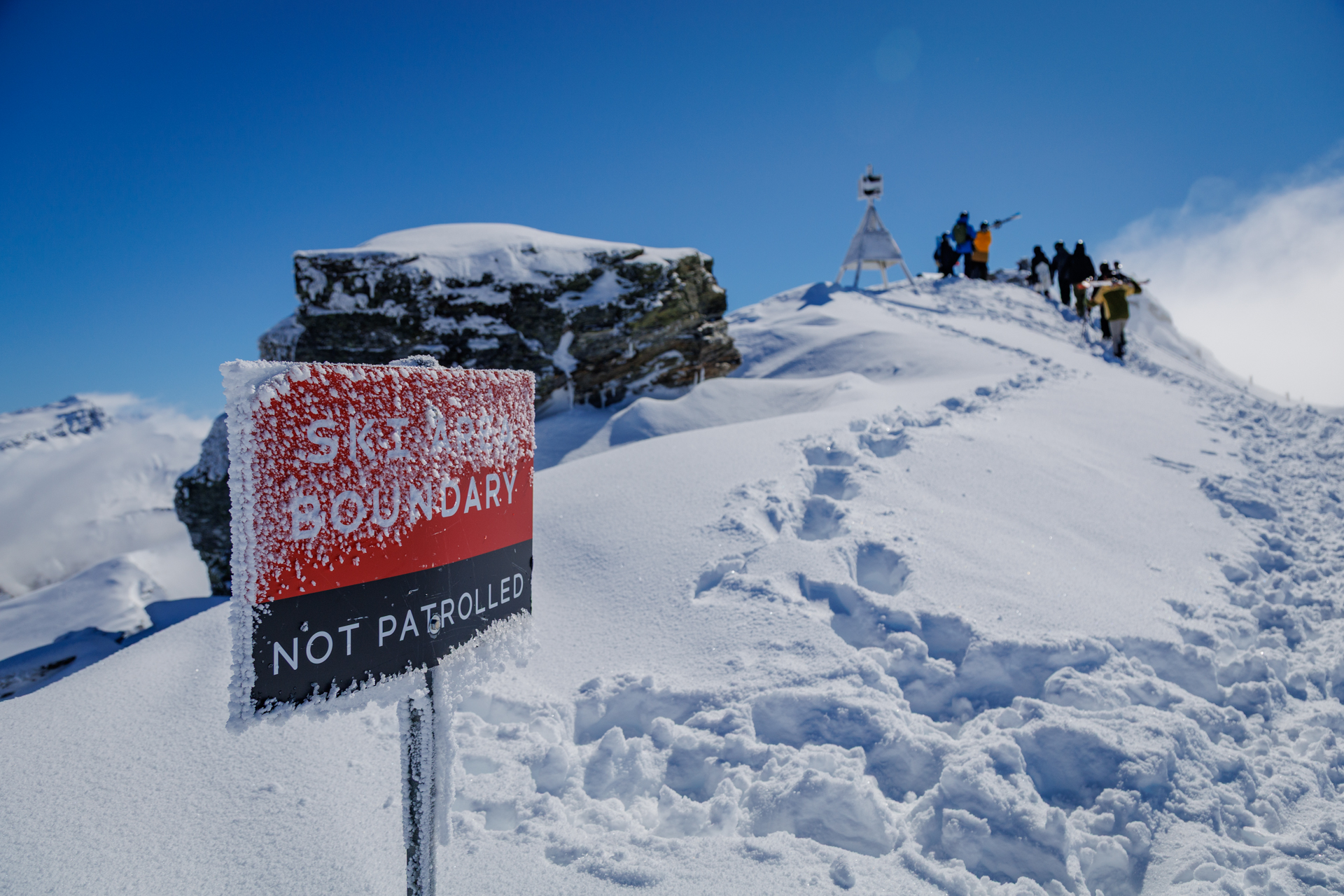
Day one wasn’t in a halfpipe at all. The Teamwork Challenge took place at Treble Cone Ski Resort in Wanaka, and honestly… it was an insane powder day full of powder and flips. The world’s best athletes just treated the mountain like a playground!
Photographically, it’s a completely different problem from shooting the pipe. There’s no fixed hit and no set line. Riders can appear anywhere on the face, spectators are perched on the rocks right alongside them, and the cloud comes and goes over the ridge whenever it feels like it. Chasing the athletes around the mountain is hard enough…and figuring out where they were going to launch from was another game entirely!
I knew to pick two kinds of spots and commit to them. The first was above the drop zone, looking down, to show off the views and the athletes looking on. The second was below the drop, off to the side, so I could capture how big the drop really was with the Matukituki Valley stretching out in the background.
- Reach matters. The Canon EF 100-400mm f/4.5-5.6L lived on my camera most of the day, as well as my Tamron 70-200 2.8. When the action is hundreds of metres away across a face, nothing else gets you there.
- Let scale do the work. My favourite frame from the day is a skier launching off the ridge with a line of spectators along the rocks beside him. The trick is great, but it’s the people and the terrain that make it feel huge.
- Another realisation I had up there was to not fight the cloud and wait for a blue sky moment, but to use it as part of the story. Flat grey light is tough, but a rider silhouetted against white cloud can be a beautiful, clean frame. Add some exposure compensation and embrace it as a moody shot.
Day two: practice, Shaun White and the Mini Pipe Challenge
Day two at Cardrona brought all the smiles and good vibes. Practice in the morning, then Shaun White’s Mini Pipe Challenge in the afternoon, and the energy just kept building all day.
This was the day I learned the most about the halfpipe itself, because I hadn’t shot halfpipe up until this point and spent alot of time walking around finding good angles.
Riders go through their runs again and again, and if you’re paying attention you start to see the pattern: where each person gets their height, which wall they go biggest on, when they’re going to throw the big trick. By competition day, you want to already know where to point your camera.
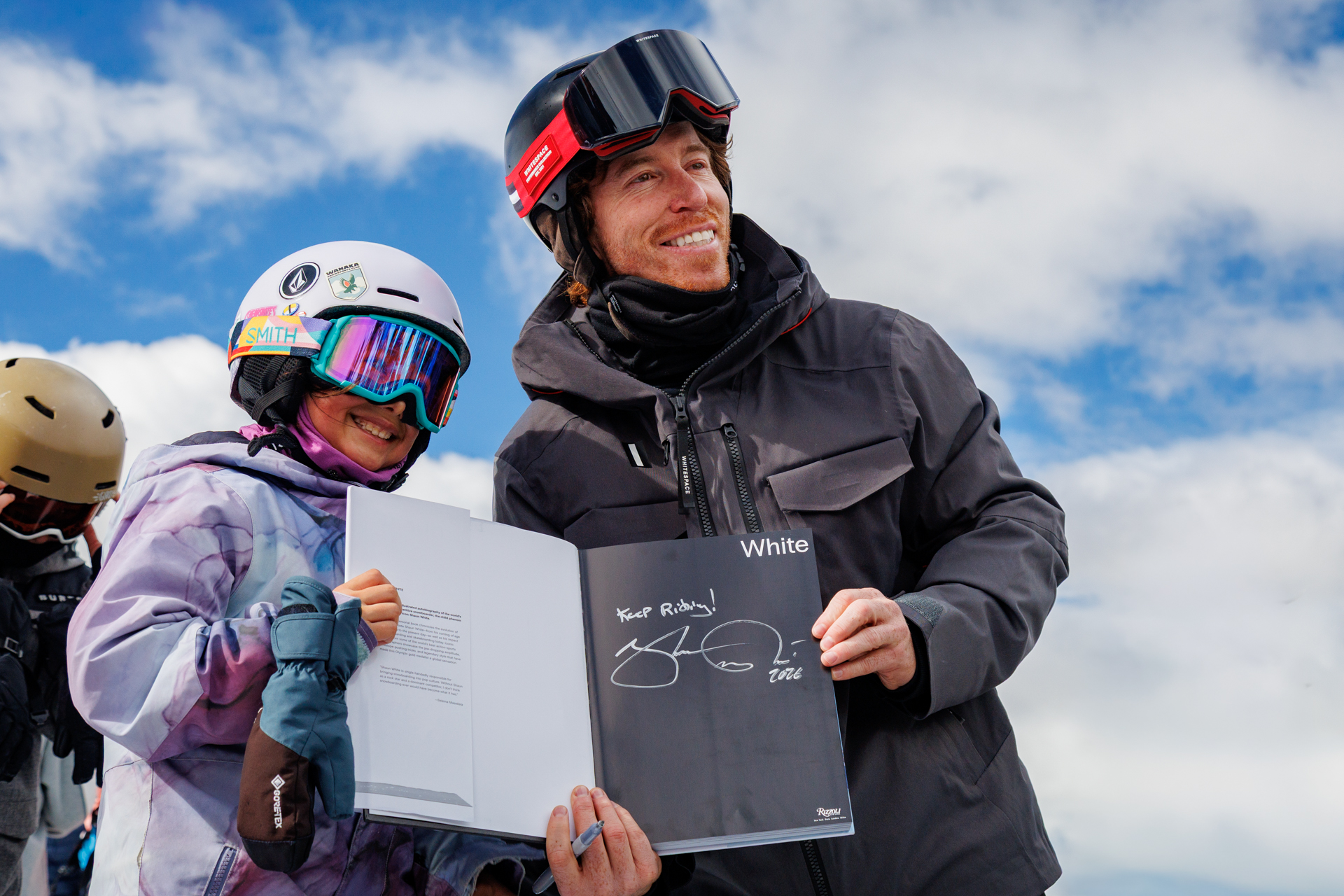
It was also the day I was reminded that an event isn’t only the tricks. Some of my favourite frames from the whole week are nowhere near the lip. There were young fans getting their books signed, riders laughing between runs, and Shaun working his way through the crowd. Seeing the impact Shaun White has had on the sport, firsthand, was really special!
Competition day in the Cardrona halfpipe
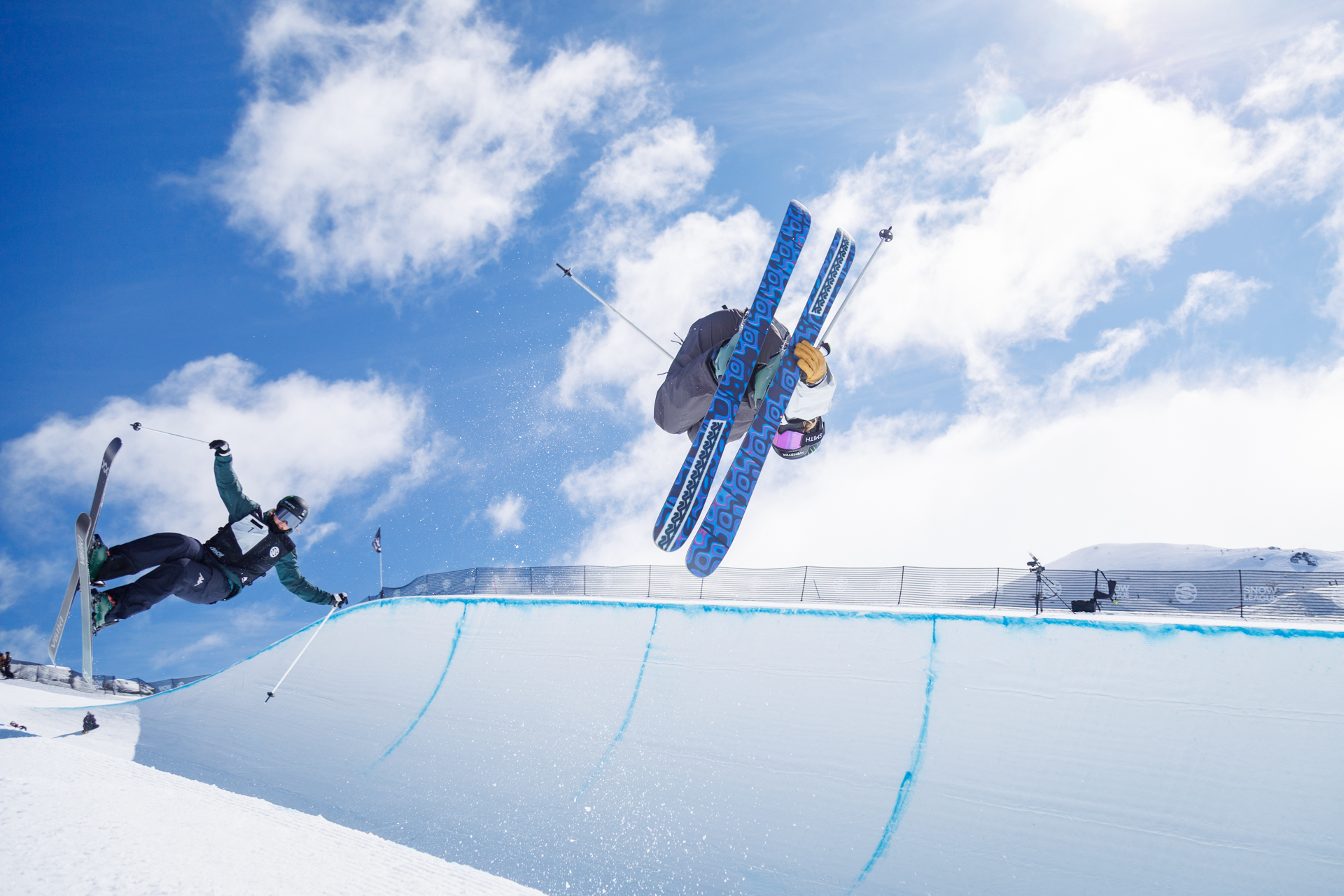
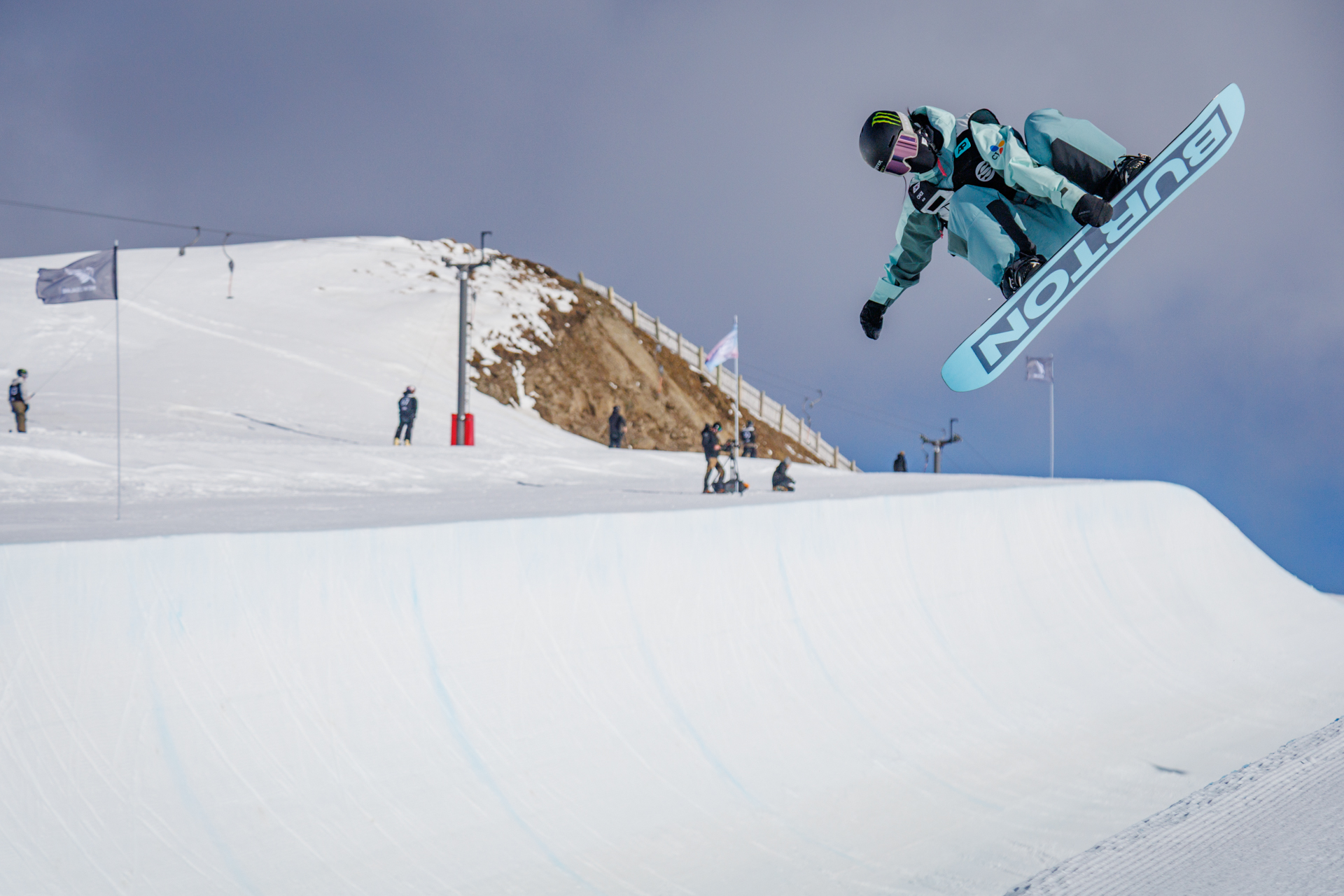
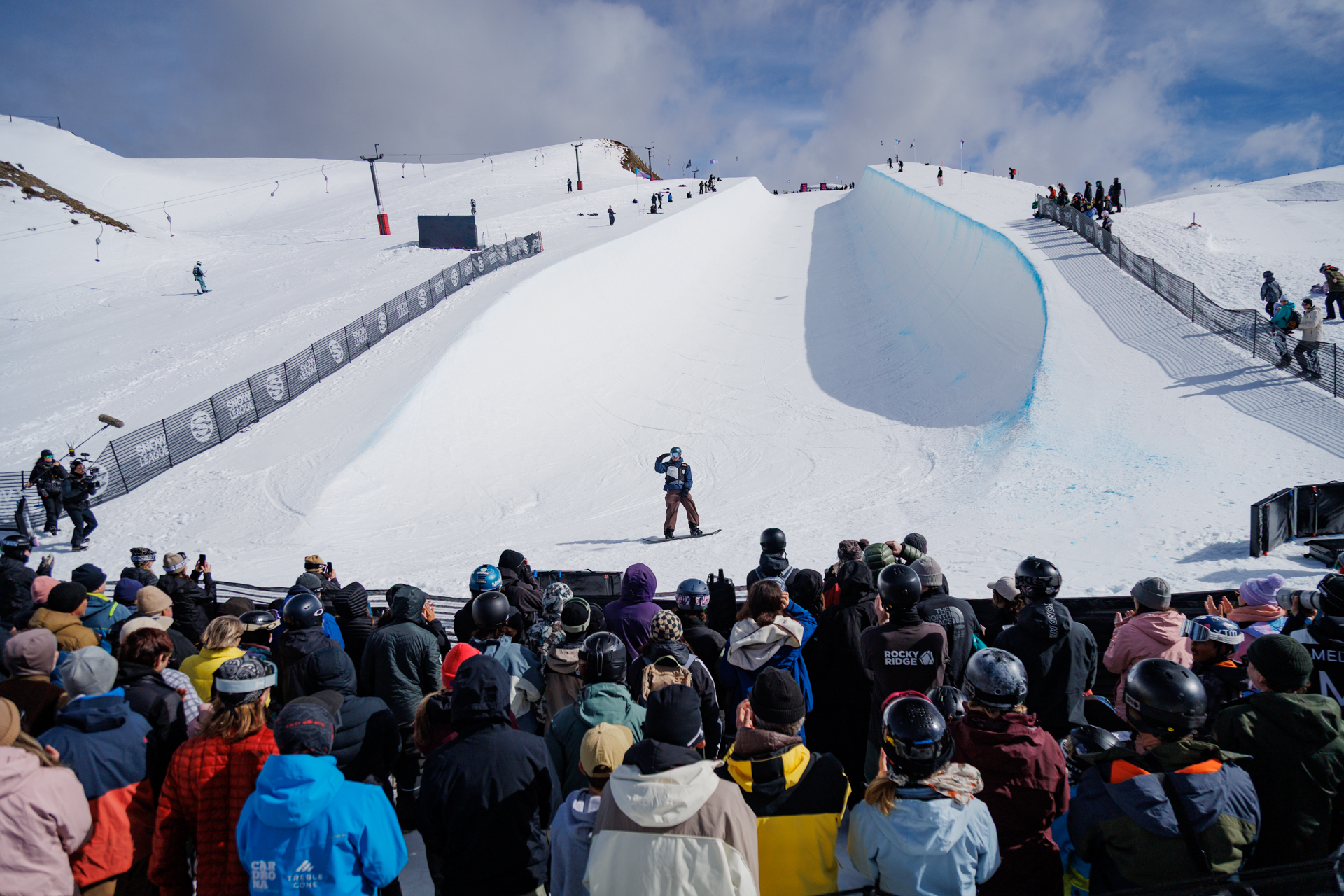
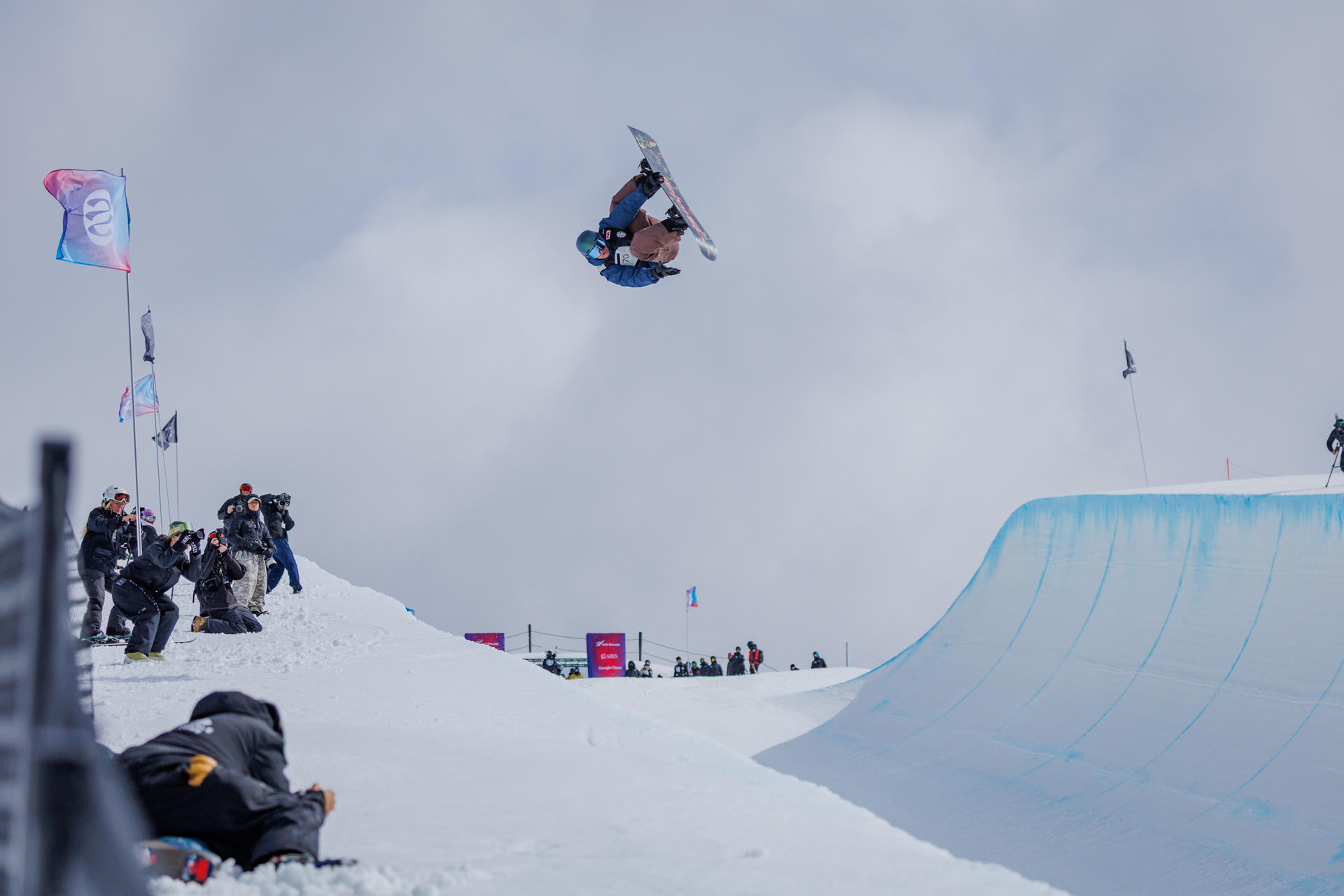
Saturday was nothing but greatness. There were high-flying acrobatics, energetic crowds, and the new four-team format meant every head-to-head hit actually mattered. There’s a different buzz when riders are competing for a team and not just themselves… you could hear it in the crowd!
This is where all my homework payed off. I knew the spots where the riders would pop up, I felt like I knew my positions, and now it was about executing: staying on the rider, nailing the peak of the air, and moving around the course so I didn’t come home with 400 versions of the same frame.
How do you photograph a halfpipe?
Here’s everything I’d tell a photographer heading to their first halfpipe event, whether it’s The Snow League or a local comp at Cardrona.
Where should you stand?
Media at the World Challenge could shoot from a media corral at the base of the pipe and from any spectator area, and I went all around the course over the three days.
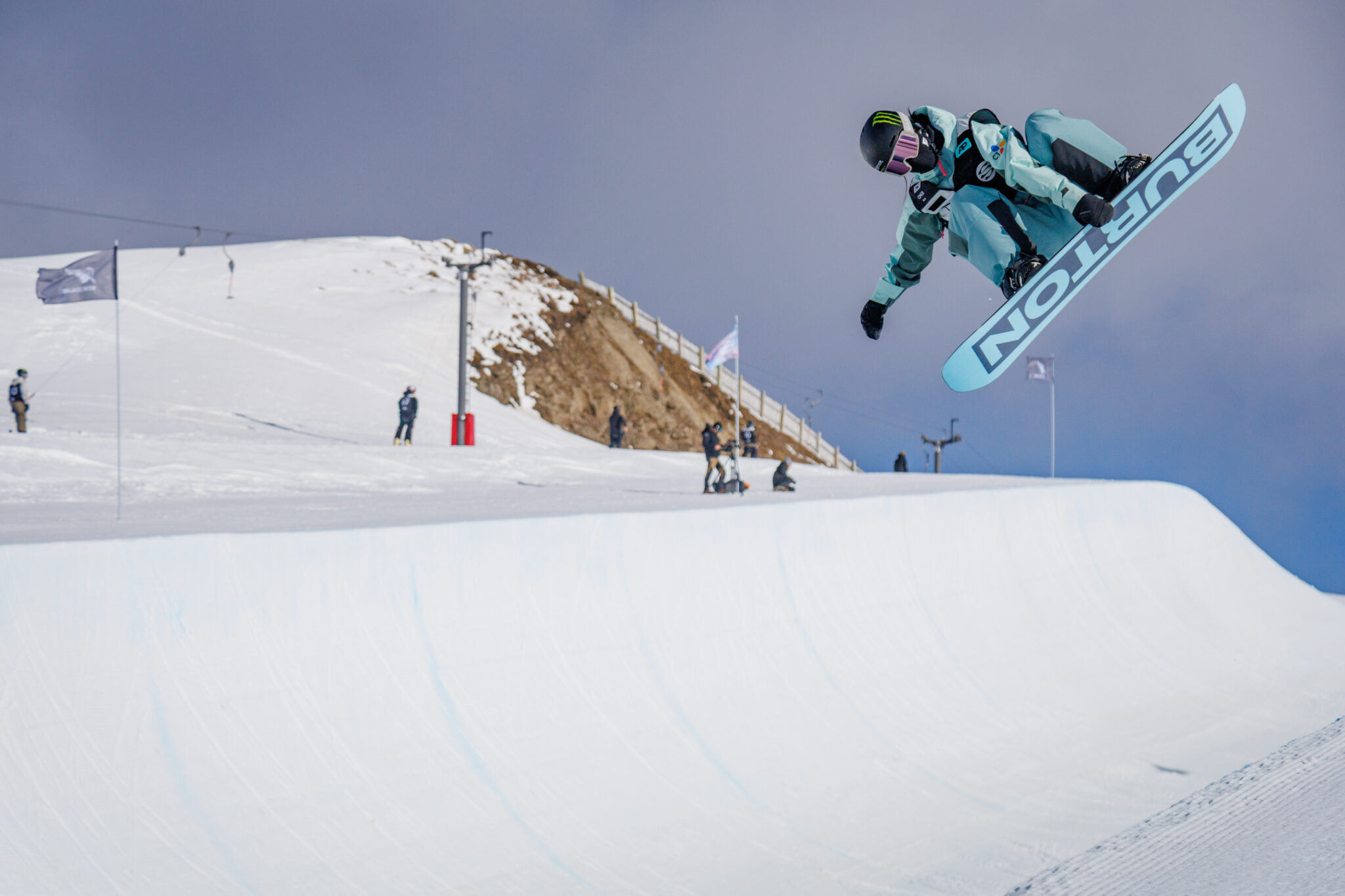
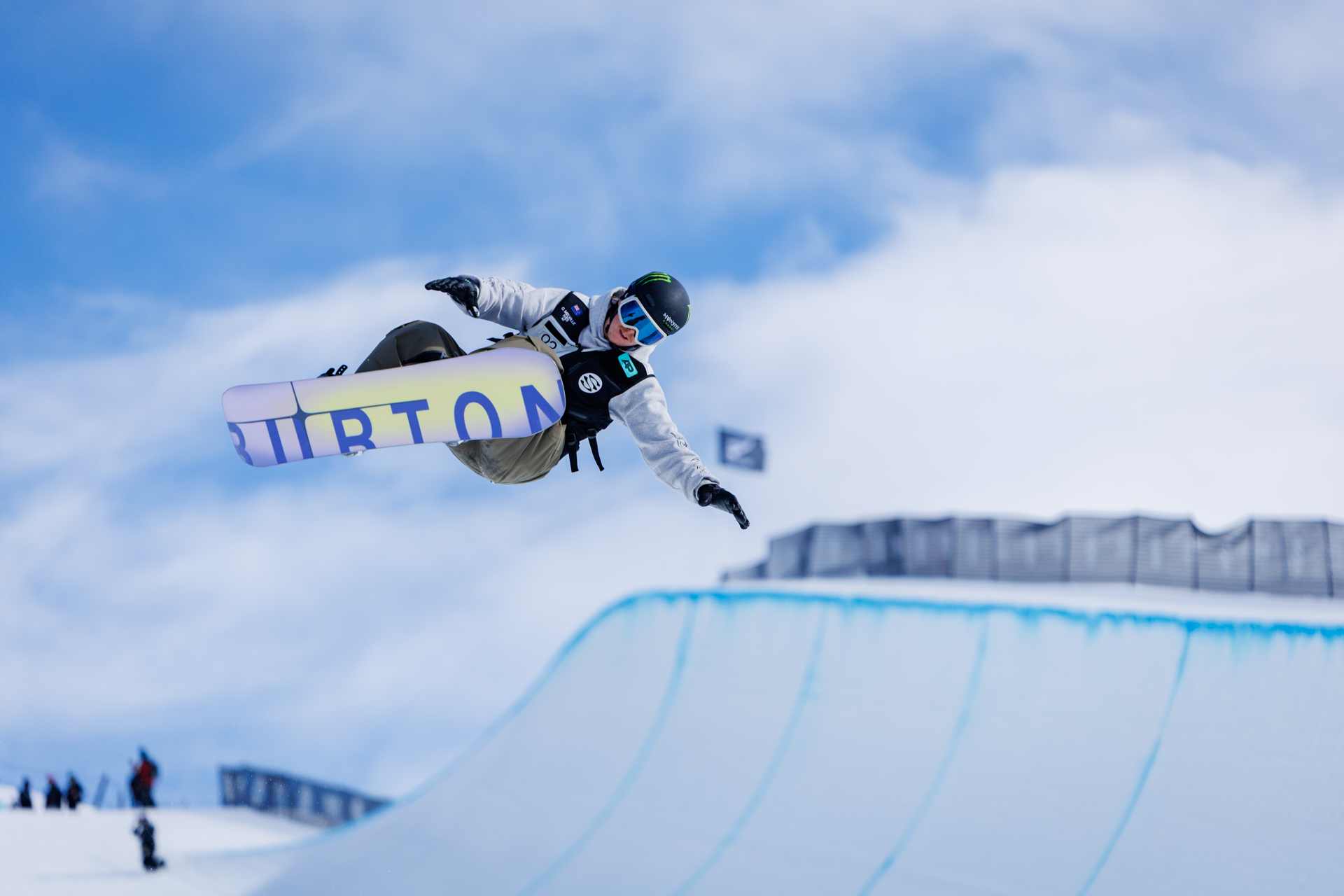
My favourite spot all week was the bottom section of the pipe, shooting up at an angle. From there I could catch riders in the middle of their run, which is usually where the momentum is highest and the trick potential is best. Every position gives you something different though:
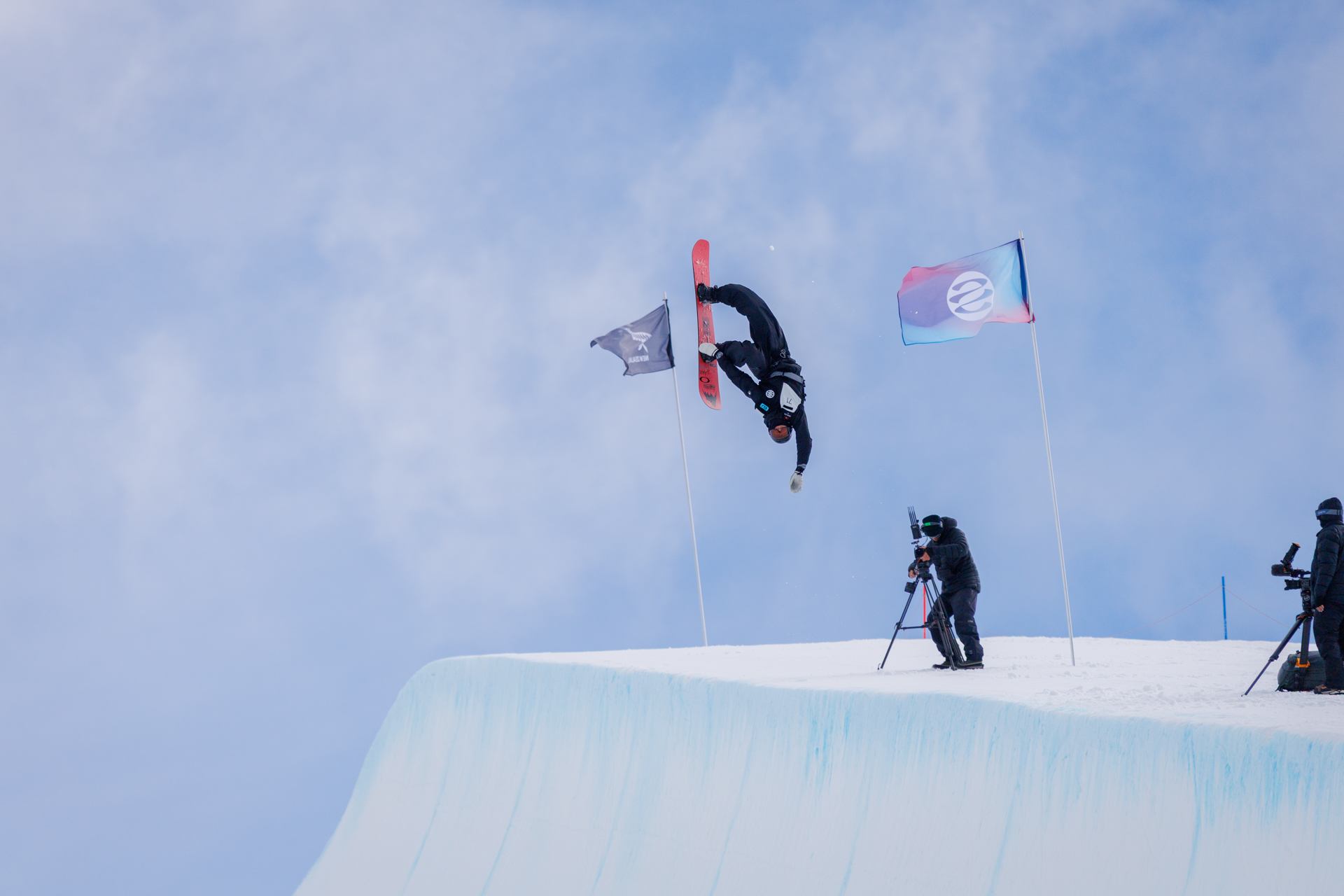
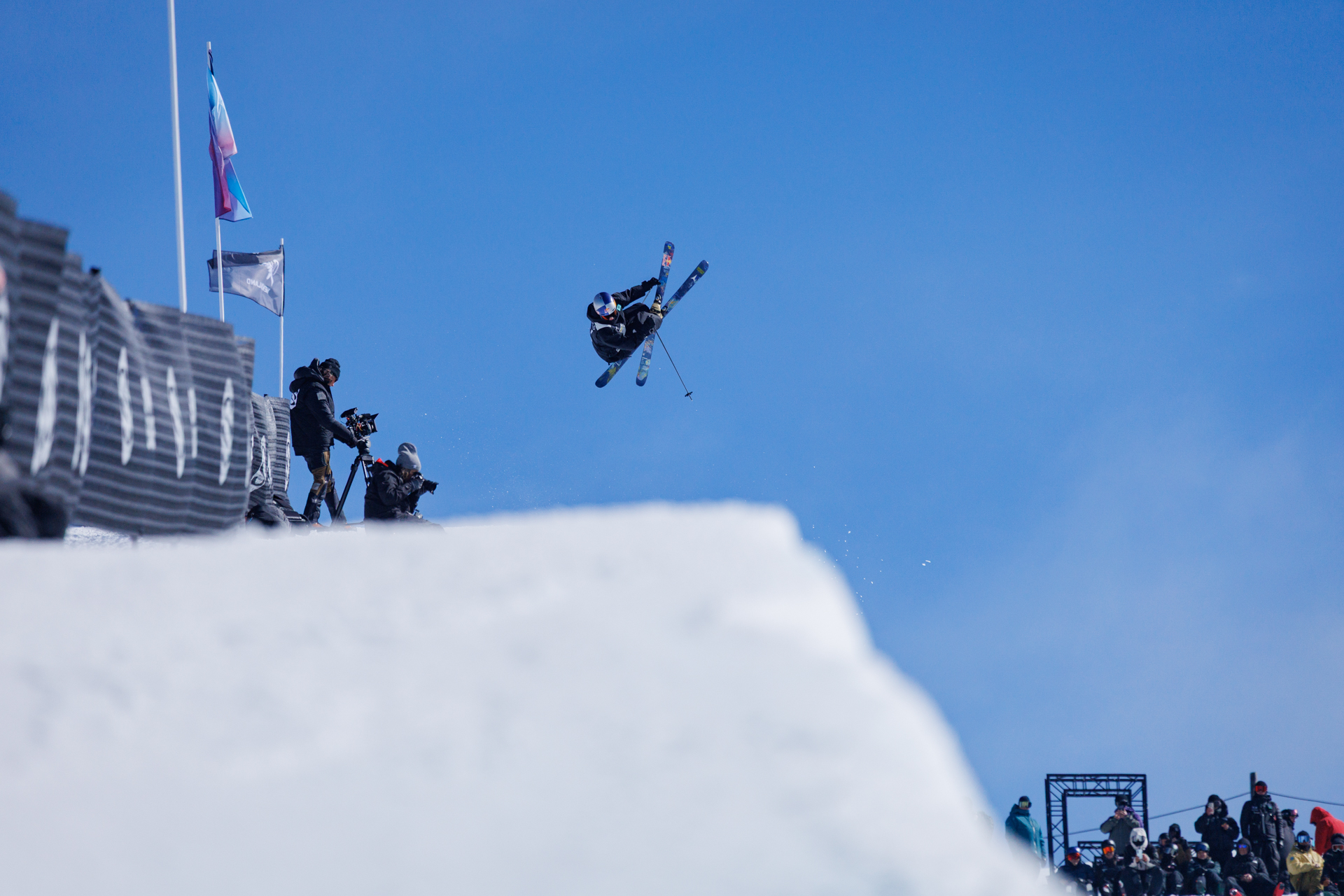
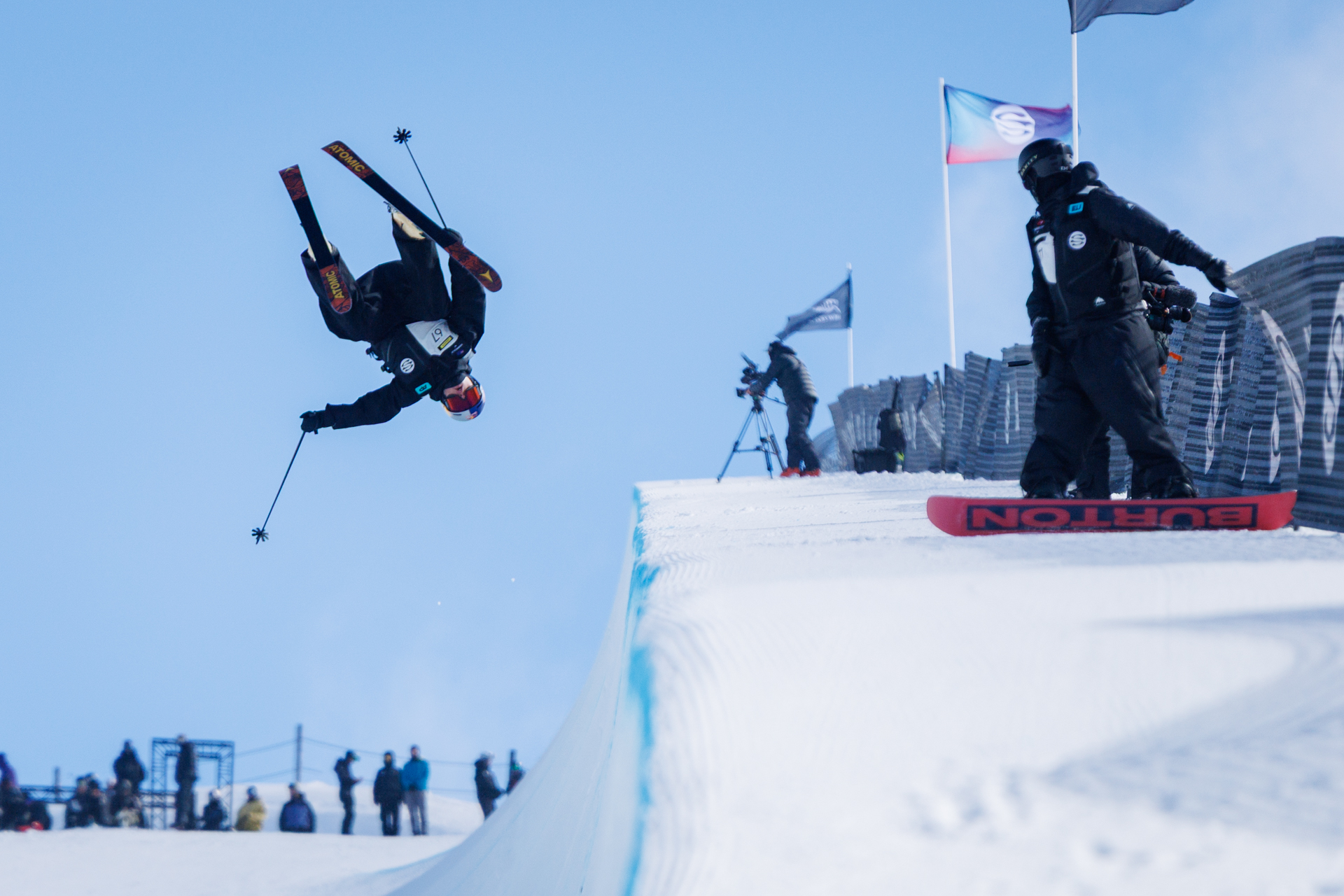
- – Low on the deck, looking up. The classic. The rider is inverted above the lip, with sky behind them and nothing else in the frame. My favourite competition-day shot came from here, with the event flags either side of the rider and camera crews on the deck below.
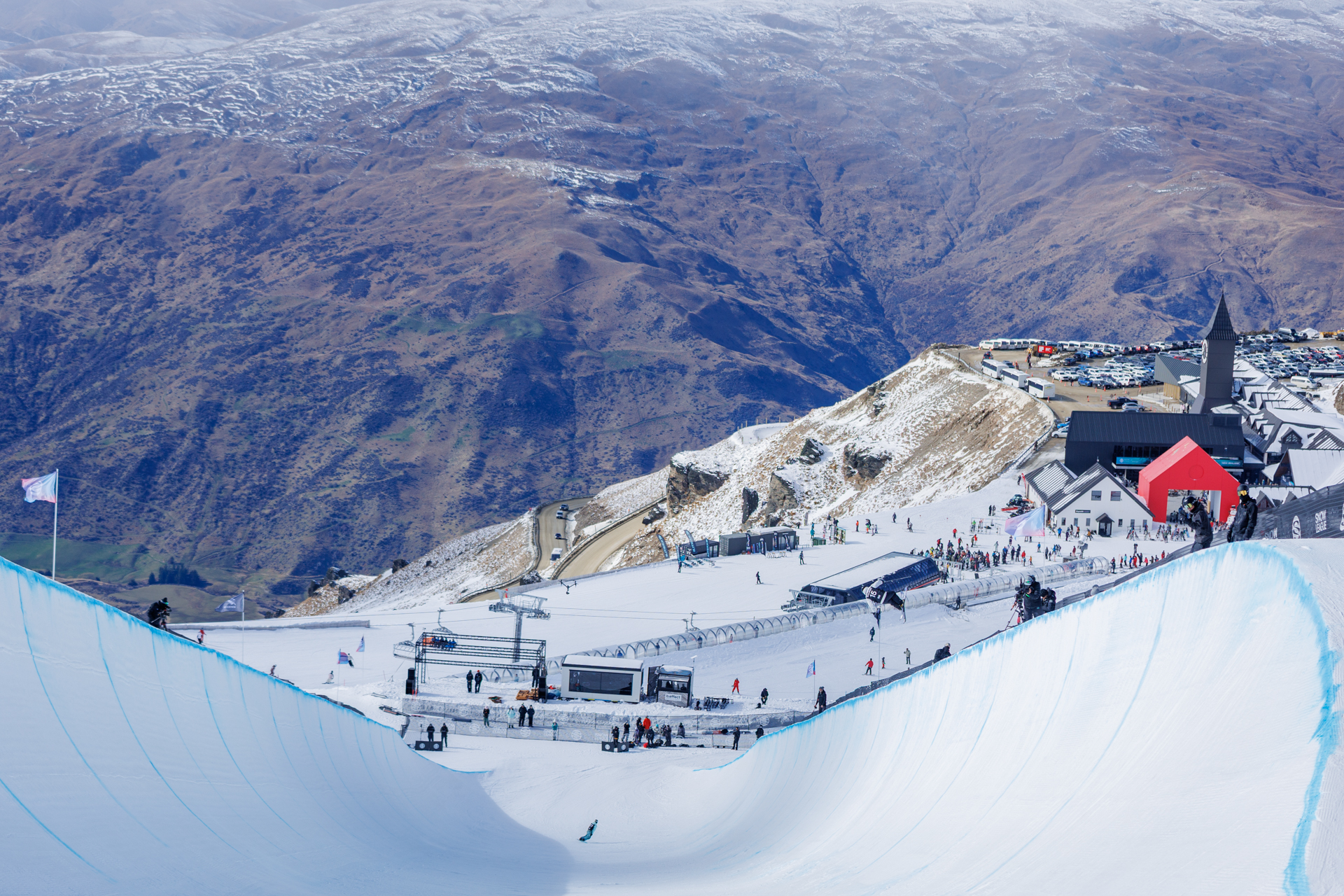
- – At the base, looking up the pipe. A telephoto compresses the walls and shows how long and steep the pipe really is.
- – Wide, from the sides. A wide lens lets you include the crowd, the broadcast cameras and the pipe itself. These frames tell the story of the event, not just one trick.
– Anywhere the crowd of cameras isn’t. Everyone gets the same frame from the obvious spot. Walking the course is how you find something different.
What camera settings work for halfpipe photography?
I shot the whole week on a single Canon EOS R6 Mark II, stills and video. To be honest… my settings were a mixture all week. The light changed constantly, the wind came and went, and I was switching between stills and video. So rather than one magic number, here’s where I’d start for halfpipe:
- Shutter speed: 1/1000s or faster. Riders are rotating fast, and you want the board, the grab and the spray of snow frozen sharp.
- Autofocus: continuous, with subject tracking. Against a clean sky, modern tracking locks onto a rider and holds them really well.
- Exposure compensation: plus one to two stops. Snow and bright sky fool your meter into underexposing everything. If your riders are coming out as grey silhouettes, this is why.
- Drive: short bursts. Fire from takeoff to the top of the air. The peak is the frame you want, and a burst gives you a choice.
But honestly… the real trick isn’t settings, it’s timing. Know where each rider hits the wall before they drop in, pre-compose on that spot, and let them come to you.
Which lenses do you need to shoot a halfpipe?
- Tamron 70-200mm f/2.8. The workhorse from the deck and the base. It covers most of the pipe, and f/2.8 saves you when cloud rolls in and the light goes flat.
- Canon EF 100-400mm f/4.5-5.6L. The key lens for freeride at Treble Cone, and great for reaching up the pipe from the base.
- Canon 24-105mm f/4. The in-between lens for athletes, crowds and all the moments off the snow.
- Canon 16-35mm f/2.8L II. Wide, low shots that put the rider, the pipe and the people watching into one frame.
If you could only bring one lens to a halfpipe, a 70-200 would do most of the work.
How do you shoot video and stills at the same event?
I shot both on the same body all week, including a set of video postcards that ended up being some of my favourite content from the whole trip. The main thing is to decide before each run what you’re shooting. Switching settings mid-run is how you miss both.
What's it like to cover a world-class event independently?
This is the part nobody really sees, and it’s the part I’m proudest of.
Over three days I covered two mountains, shot stills and video on one camera, and edited and posted the same day from the media centre at Cardrona. Most days I shot 2,000 frames or more, so the cull was a job all of its own. At this level, same-day turnaround is simply the standard. Athletes, sponsors and media want images while the event is still news, not a week later.
The hardest part? The conditions. It was windy and COLD, which is tough on fingers, batteries and gear. Between runs everything lived in my Atlas Athlete pack, which kept my kit safe from the wind and snow and ready to go for the next hit. (Full disclosure, I’m an Atlas Packs ambassador… but this is exactly the kind of week I chose them for!).
Working out of that media centre was easily one of the best parts of the week. I was sharing the space with the league’s own team and with editors and photographers from international agencies and publications. Getting to see how content at that level gets made, moved and published, and to meet the people doing it, was worth the trip on its own.
Common questions about The Snow League New Zealand
Where was the Snow League World Challenge held?
The Snow League World Challenge was held at Cardrona Alpine Resort near Wānaka, New Zealand, in September 2026, with a Teamwork Challenge at nearby Treble Cone. It was the first team-based event in The Snow League’s history and opened the league’s second season.
Who won the Snow League World Challenge in New Zealand?
Team Challengers won the inaugural Snow League World Challenge at Cardrona. The team included New Zealanders Fin Melville Ives and Mischa Thomas, who both won their freeski divisions, alongside Japan’s Ryusei Yamada and Sara Shimizu.
Where is the best place to stand when photographing a halfpipe?
The bottom section of the pipe, shooting up at an angle, catches riders in the middle of their run, when momentum and trick potential are highest. Low on the deck gives you riders against clean sky, and wide positions from the sides tell the story of the whole event.
What are the best camera settings for halfpipe photography?
Start with a shutter speed of 1/2000s or faster, continuous autofocus with subject tracking, and one to two stops of positive exposure compensation to stop the snow from underexposing your images. Fire short bursts, and learn where each rider hits the wall before they drop in.
Do you need a media pass to photograph an event like The Snow League?
To shoot from the media areas, yes. You apply for accreditation through the event’s media team ahead of time. Spectators can take photos from public areas, but a media pass gets you into the corral at the base of the pipe and the media centre.
Chris Chase is a Queenstown-based commercial photographer and documentary filmmaker, a World Sports Photography Awards 2025 Finalist and 2023 merit winner, and a registered New Zealand teacher. He photographs adventure sport, events and brands across The Queenstown Lakes District and beyond.
Planning an event on the mountain?
Book a call now, or see my portfolios for event photography and videography, and adventure sports photography for brands and operators... I'd love to hear what you're planning!